 Applecu Everything Bank, Health, Tech, Business, Lifestyle
Lucas DIPG Recovery: The Extraordinary Story of a Boy Who Defied the Odds
Lucas DIPG Recovery is an extraordinary medical story that has brought renewed hope to families affected by one of the most challenging forms of childhood brain cancer.
At just six years old, Lucas, a boy from Belgium, was diagnosed with diffuse intrinsic pontine glioma (DIPG), a rare and aggressive brain tumor that develops in the brainstem.
His diagnosis brought heartbreaking news to his family. Doctors explained that the disease was extremely difficult to treat, and the outlook for children with this condition was very concerning.
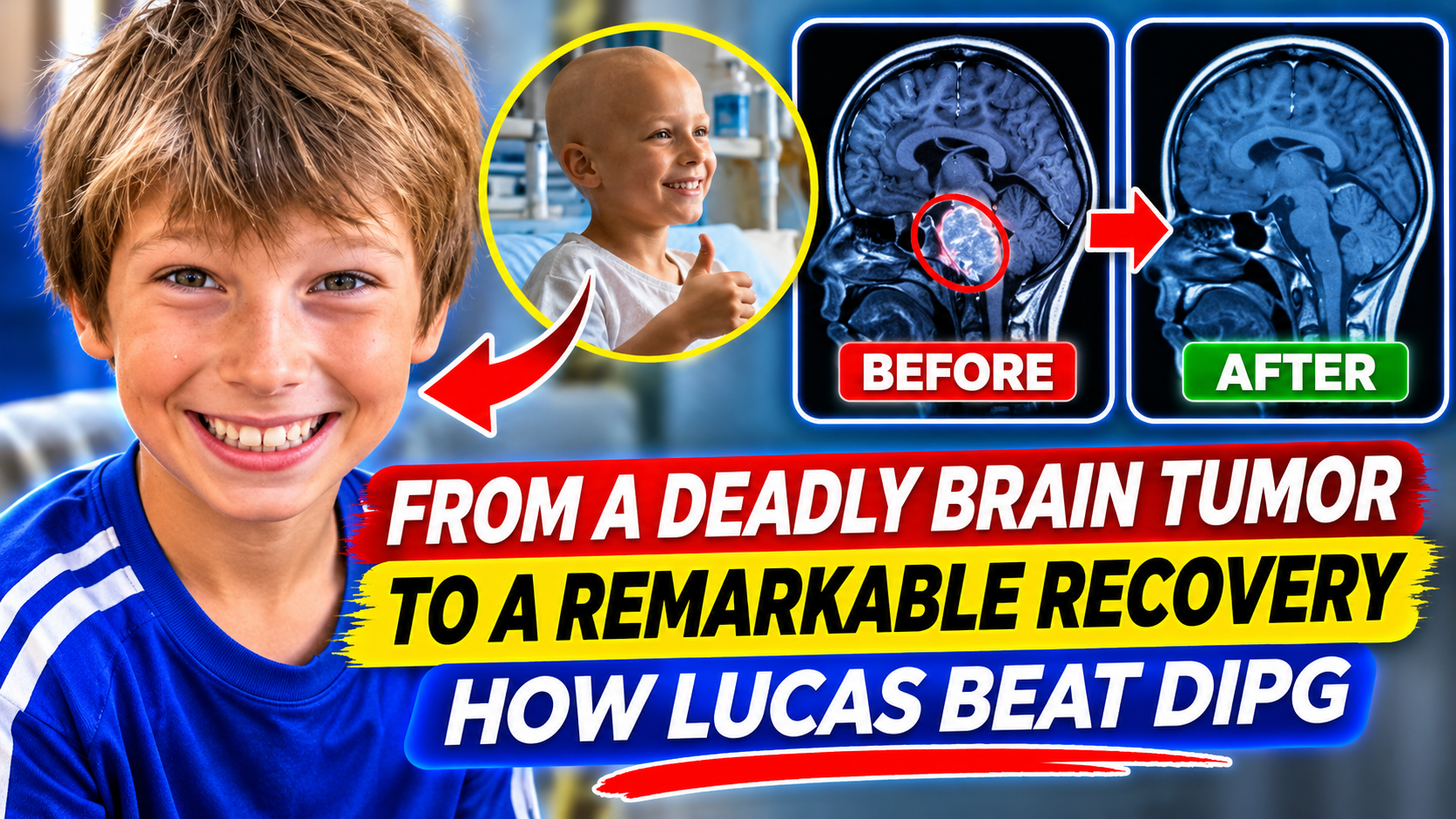
But Lucas’s journey took an unexpected turn after his family traveled to France and enrolled him in a clinical research trial at Gustave Roussy, a leading cancer center near Paris.
Over the following years, doctors observed an extraordinary response. His tumor gradually disappeared from MRI scans, making his case one of the most remarkable outcomes reported in DIPG research.
By the time Lucas was 13, doctors reported that there was no visible trace of the tumor remaining.
His story has since become an important source of hope for childhood cancer research and families around the world.
A Life-Changing Diagnosis at Just Six Years Old
Lucas was only a young child when his family first began facing the challenges of his illness.
At six years old, he was diagnosed with DIPG, a tumor that affects the pons, an important part of the brainstem responsible for several essential functions.
The condition can affect movement, balance, speech, vision, and swallowing.
For Lucas’s parents, receiving the diagnosis was devastating.
His French physician, Dr. Jacques Grill, later recalled how difficult it had been to explain the seriousness of the disease to the family.
At the time, treatment options were extremely limited, and doctors knew that his condition would be challenging to manage.
Nevertheless, Lucas’s parents continued searching for opportunities that might give their son a chance.
They eventually made an important decision that would change the course of his medical journey.
His Family Traveled From Belgium to Paris for Treatment
Rather than giving up hope, Lucas’s family traveled from Belgium to France to seek specialized medical care.
He became one of the early participants in the BIOMEDE clinical trial, a research program designed to investigate potential treatments for children diagnosed with DIPG.
The study was conducted at Gustave Roussy, a major cancer research and treatment center near Paris.
The trial evaluated different targeted medicines alongside radiation therapy.
Lucas was randomly assigned to receive everolimus, a medication that works by targeting a protein involved in cell growth.
Researchers were interested in understanding whether certain biological characteristics of individual tumors could help explain why some patients responded differently to treatment.
For Lucas, the response was remarkable.
Doctors Watched as His Tumor Gradually Disappeared
As Lucas continued receiving treatment, doctors regularly monitored his condition through MRI scans.
The results began showing something unexpected.
His tumor was gradually becoming smaller.
With each examination, the medical team observed further improvement.
Eventually, the scans showed that the tumor had completely disappeared from view.
Dr. Jacques Grill described Lucas’s response as extraordinary, explaining that he had never seen another case quite like it.
The development surprised the medical team because DIPG has historically been one of the most difficult childhood brain tumors to treat.
Lucas’s recovery became a particularly important case for researchers seeking to understand why certain patients respond exceptionally well to particular therapies.
His experience also demonstrated the importance of continued medical research and individualized approaches to cancer treatment.
What Made Lucas’s Case So Different?
One of the biggest questions researchers wanted to answer was why Lucas responded so differently from most other children diagnosed with DIPG.
Scientists investigated the biological characteristics of his tumor and identified an extremely rare genetic mutation.
Researchers believed this mutation may have made the tumor cells particularly sensitive to everolimus.
This finding offered an important research direction.
Instead of assuming that the same treatment would work equally well for every patient, scientists began exploring how individual tumor characteristics could influence treatment responses.
Researchers also worked with laboratory-grown tumor models, known as organoids, to investigate whether the biological features observed in Lucas’s case could be reproduced.
The hope was that understanding these differences could eventually help researchers identify new treatment possibilities for other children.
However, scientists emphasized that much more research would be needed before this discovery could lead to broadly effective treatments.
The Medical Research Behind the BIOMEDE Trial
Lucas’s story is closely connected to the BIOMEDE clinical research program.
The study investigated potential targeted treatments for children with DIPG, including everolimus, erlotinib, and dasatinib.
The research aimed to understand whether selecting medicines according to the biological characteristics of individual tumors could improve treatment outcomes.
Although Lucas experienced an exceptional response, his experience should not be confused with the overall results of the clinical trial.
In April 2026, Gustave Roussy reported that the BIOMEDE 1.0 trial did not meet its primary objective of improving overall survival across the study population.
Nevertheless, the research provided valuable biological information, documented prolonged survival in some children, and helped guide future research.
The findings demonstrate why individual success stories and large clinical trial results must be considered separately.
A remarkable outcome in one patient does not automatically mean that the same treatment will work for every child.
Why DIPG Remains a Major Challenge in Childhood Cancer Research
Diffuse intrinsic pontine glioma is considered one of the most difficult pediatric brain tumors because of its location and biological behavior.
The tumor develops in the pons, a region of the brainstem that controls several essential functions.
Because tumor cells spread through important surrounding brain tissue, surgical removal is generally not possible without causing serious damage.
According to Gustave Roussy, DIPG remains extremely difficult to treat, and there is no standard treatment that cures the majority of affected children.
Radiation therapy is commonly used to temporarily control the disease and relieve symptoms.
Researchers around the world continue investigating targeted medicines, new treatment combinations, and other experimental approaches.
For families receiving this diagnosis, access to specialized medical teams and appropriate clinical research opportunities can be important parts of the care journey.
Lucas’s Story Is Giving Researchers New Hope
Lucas’s experience has become an important example of why continued research into childhood brain tumors matters.
His extraordinary response encouraged scientists to investigate the genetic characteristics that may have influenced his treatment outcome.
Researchers hope that understanding these biological differences could help identify similar patterns in other patients.
The work may also contribute to the development of future clinical trials designed to explore more personalized treatment approaches.
Gustave Roussy has continued its research through BIOMEDE 2.0, an international clinical trial involving patients with malignant midline and brainstem gliomas.
The new research program is designed to investigate additional treatment possibilities and build on the scientific knowledge gained through earlier studies.
Although there is still much work ahead, each discovery can contribute to a better understanding of this challenging disease.
A Story of Hope for Families Around the World
For Lucas and his family, the journey began with a diagnosis that changed their lives forever.
They faced uncertainty, difficult medical decisions, and years of treatment and monitoring.
But his remarkable response became a moment of hope that extended far beyond his own family.
For parents whose children are facing similar diagnoses, Lucas’s story offers a reminder of the importance of medical research, specialized care, and continued scientific progress.
It is also a reminder that every patient is different and that individual treatment outcomes can vary considerably.
His experience does not mean that DIPG has been cured or that an effective treatment is now available for every child.
Instead, it represents an exceptional medical outcome that has encouraged researchers to investigate new possibilities.
The work of scientists, doctors, families, and research organizations continues as they search for better ways to help children affected by this disease.
The Importance of Never Giving Up on Childhood Cancer Research
Lucas’s journey is more than an extraordinary medical story.
It highlights the dedication of families who search for answers, the commitment of doctors who care for children facing serious illnesses, and the researchers working to understand diseases that remain difficult to treat.
Every clinical trial contributes information that may help improve future research.
Every unusual treatment response can raise new scientific questions.
And every discovery brings researchers another opportunity to explore better options for patients.
Lucas’s experience has given the medical community an exceptional case to study and has helped strengthen the motivation to continue researching childhood brain cancer.
His journey reminds us that even when the medical outlook is difficult, research and scientific discovery remain essential sources of hope.
A Message of Hope
Lucas’s story has touched families around the world and reminded many people of the importance of supporting childhood cancer research.
What do you find most inspiring about his journey? Do you believe continued medical research will help create better treatment opportunities for children facing rare brain tumors?
Share your thoughts and messages of encouragement in the comments below.
Medical information disclaimer: This article is for educational and informational purposes only. Lucas’s outcome was an exceptional individual case and does not establish a generally effective cure for DIPG. Treatment decisions should always be made with qualified medical professionals.